 Qatar Now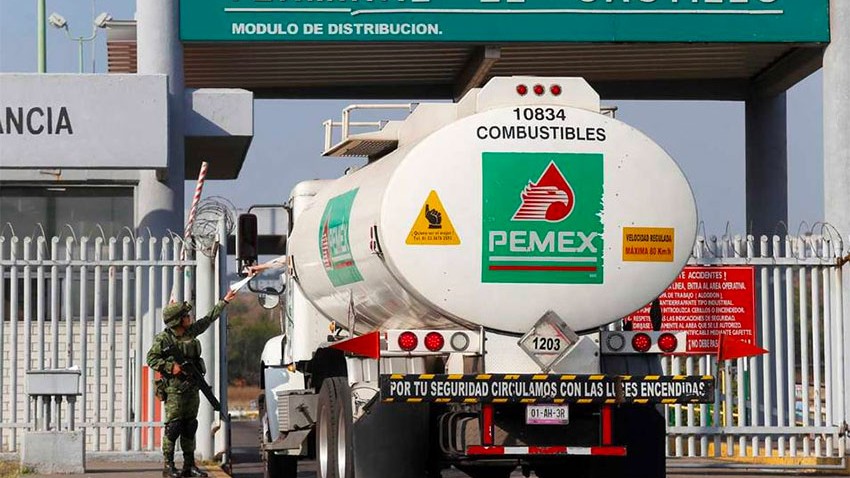
Home Energy Energy-General By Charles Kennedy - Sep 10, 2026, 5:00 PM CDT Mexico plans to slash financial support for Pemex by nearly 70% in 2027, betting higher oil prices will generate a $5.6 billion cash surplus. Pemex remains deeply troubled despite cutting debt to about $79 billion, with weak production, refining problems and a $2.6 billion Q1 loss. Higher oil prices and disrupted Middle East supplies could provide a lifeline, but Pemex’s persistent financial and operational problems run much deeper than crude prices.
Mexico’s government is slashing financial assistance for the state energy major by as much as 70% despite Pemex’s continued struggle to pay down debt and boost production. The decision rests on expectations that the company will benefit from the oil and gas price rally spurred by the U.S. and Israeli war against Iran. Per a Bloomberg report from this week, the government of Mexico sees Pemex posting a rare cash surplus of some 95 billion pesos, or around $5.63 billion, as a result of the oil price rally.
Based on those expectations, the Scheinbaum government stipulated financial help of just 81 billion pesos for the company in next year’s budget, equivalent to some $4.8 billion. This was down by 70% from this year. “We said that by 2027, support for Pemex would be very limited, and that’s indeed the case,” President Sheinbaum told media this week.
“Pemex now receives very little support from the Mexican government, and its own finances will sustain its development.” Mexico’s energy major is the most indebted company in the world, with a load of some $105 billion as of mid-2025, of which some $20 billion is in unpaid bills to suppliers. Since then, the company has managed to reduce the debt pile to some $79 billion as of the end of the first quarter of this year. The company said in a news release at the time that this was the lowest its debt has been since 2014.
Meanwhile, however, boosting refining output has turned out to be a challenge, and issues with crude quality—including high water content—have alienated key buyers over the past couple of years. The previous administration of Mexico focused on supporting the company by turning it back into a monopoly on the Mexican energy market. The Scheinbaum government, on the other hand, moved to open up the Mexican oil industry to other players as well, launching a new contract framework for joint ventures, the so-called mixed contracts.
In mixed development allocations, Pemex can enter into an agreement with one or more private firms. Still, Pemex remains quite dependent on government assistance, as demonstrated earlier this year by Moody’s, which kept the company’s rating unchanged, citing expectations that government cash infusions would continue. The ratings firm expects that “the Government of Mexico will continue to provide very high and timely support to the company, as clearly demonstrated in 2025 and embedded in our forward-looking assumptions under the current administration,” Moody’s said in May this year—when oil was already being pushed higher by the war.
For the first quarter of the year, Pemex posted an actual loss, despite the oil price surge in March. The net result of the company stood at a negative 45.99 billion pesos, equal to some $2.6 billion. That was despite continued government assistance, with Mexican media noting that this was the worst first quarter for Pemex since 2020.
Not only this, but the first-quarter result was 6.2% lower than the loss that Pemex posted for the first quarter of 2025. Media attributed the loss to lower sales, higher costs, and higher depreciation of fixed assets. In other words, Pemex remained a troubled company even with higher oil prices.
The company did post a profit for the second quarter of the year, however, which reflected the positive effect of higher oil prices. Yet this profit was much lower than the net result the Mexican energy major booked for the second quarter of 2025—69.7% lower, to be precise. This suggests Pemex’s problems go deeper than low international oil prices.
The state energy major still has a chance to benefit from the supply situation resulting from the continuing war in the Persian Gulf. Because of that disruption, oil buyers around the world are looking for alternative suppliers, and Mexico could be one of them. By Charles Kennedy for Oilprice.com More Top Reads From Oilprice.com TotalEnergies to Bring New Angola Discovery Online in Just Three Months WTI Breaks $100—and This Rally Has Legs IEA: Global Coal Demand Set to Hit Record High as Iran War Chokes LNG Supply Download The Free Oilprice App Today Back to homepage Charles Kennedy Charles is a writer for Oilprice.com More Info Leave a comment EXXON Mobil -0.35 Open 57.81 Trading Vol. 6.96M Previous Vol. 241.7B BUY 57.15 Sell 57.00